
What a Recorded Duchesne County Deed Can Show
Deed records in Duchesne County trace every recorded transfer of land. The County Recorder keeps them alongside mortgages, easements, liens, releases, and plats. Search Duchesne County deed records by party name or parcel number. Then follow the grantor entries backward in time. Each instrument carries a legal description worth checking closely. That description ties the deed to the land itself. Indexes reach more than deeds alone, so expect neighbors in the results. Confirm any find with the Recorder before relying on it as a full title history. A careful property search rewards patience here.
| Deed Type | What It Does | Common Use |
|---|---|---|
| Warranty deed | Conveys the grantor's interest with promises stated in the deed | Review the granting and warranty clauses in the recorded instrument |
| Quitclaim deed | Transfers whatever interest the grantor has, without a promise of title | May appear in family, trust, or corrective transfers |
| Personal-representative deed | Records a fiduciary transfer from an estate | Compare the deed with the probate case and authority |
| Trust-related deed | Shows title moving to or from a trust or trustee | Follow the entity name and any later vesting instrument |
| Tax-sale deed | May record a transfer after a county tax sale | Check sale, redemption, and title details with county offices |
A deed transfers or documents title. A mortgage or deed of trust secures a loan. A release or satisfaction shows an interest has been discharged. Liens and easements can affect a parcel. Boundary agreements and plats can too. None of these change the owner of record. The Recorder's index may hold every one of these document families. Its FAQ cautions, though, that some liens may never appear. Judgments and encumbrances can also be missing from its deed records at all.
Recorder OnBase Has a Known Older-Number Search Hint
The Recorder's online entry runs on an OnBase service. The public page does not spell out its grantor, grantee, instrument-type, date, or parcel search fields. So assume nothing about button labels, cutoff years, or how far the images reach. Older documents are still being uploaded, the county says. For low document numbers there is a specific workaround. Put an asterisk before any number with fewer than six digits, including pre-1915 documents. The FAQ gives the example *5321. For sequential numbers, replace the final digit with an asterisk instead. Always tie a result back to party names and the legal description. A number alone may point to another instrument. If a scan is missing online, ask the Recorder about an in-office or copy route. The public entry is Duchesne County OnBase records access.
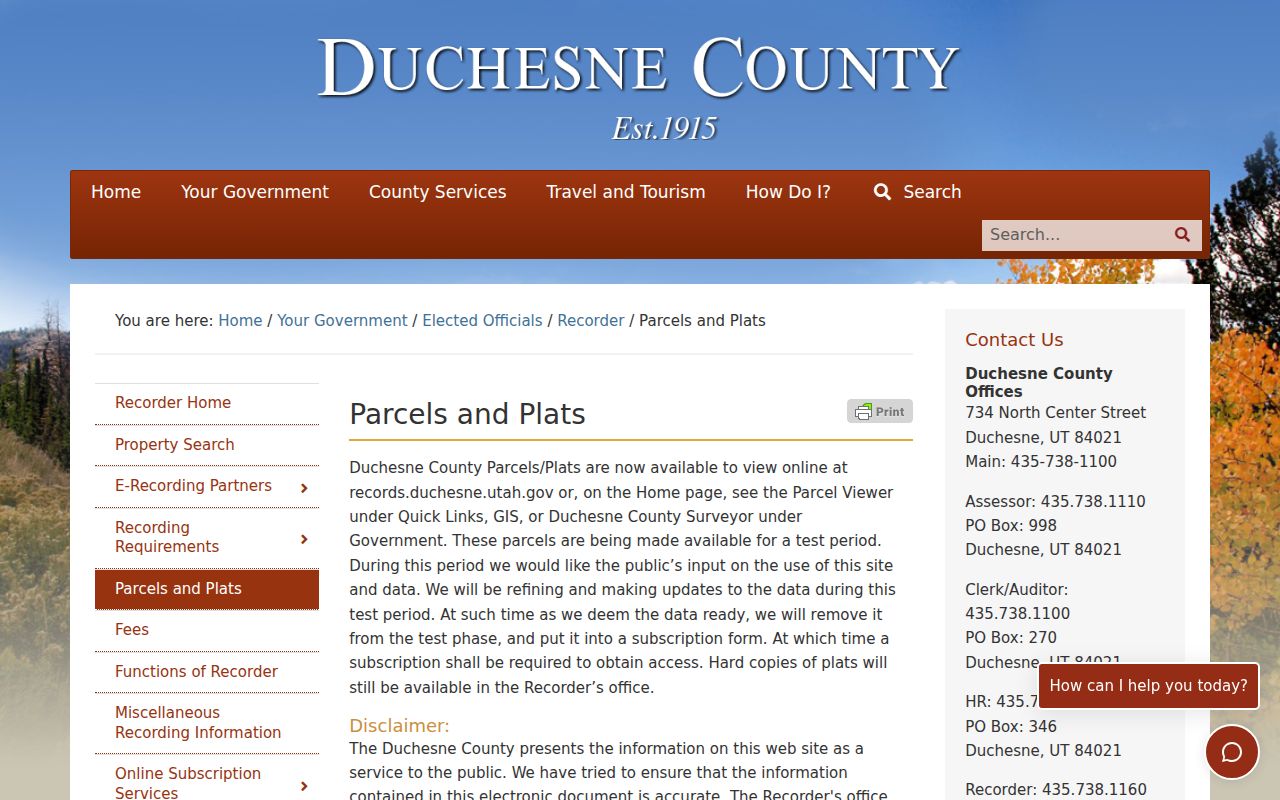
The Recorder page is the official starting point for current service details and access terms.
Walk the Duchesne County Grantor and Grantee Chain
Chain-of-title work uses both sides of every conveyance. Start with a likely current vesting deed. Confirm its parcel and legal description. Then note the grantee, grantor, execution date, recording date, instrument number, and any book or page reference. Next, search the prior owner's name as a grantee in the earlier period. Keep repeating until a probate distribution, homestead patent, earlier deed, or unresolved gap changes the path. Search parties exactly as indexed. But try spelling variants and fiduciary names where the document supports them.
- Start with the newest recorded deed that matches the parcel's full legal description.
- Write down the grantee and grantor exactly as printed, including a trust, estate, or personal representative.
- Search the grantor as the earlier grantee and compare the next deed's parcel description and date.
- Repeat backward, noting releases and boundary documents that change the record context.
- If OnBase does not reach the instrument, ask the Recorder about older uploads or an in-office copy.
- Grantor
- The party conveying an interest in the instrument.
- Grantee
- The party receiving the interest.
- Chain of title
- The ordered set of recorded transfers leading to the present vesting.
- Instrument number
- A document identifier; older references may also use book and page.
What Duchesne County Charges for Recording and Copies
Duchesne County posts separate prices for recording and for copies. A standard recording costs $45 for up to ten legal descriptions. Each additional one is $2. A subdivision or condominium plat runs $55 per sheet. Each additional lot or unit adds $2. Copies come in several tiers. Deputy copies cost $1 per page. Legal or letter copies are $0.25, ledger 11 by 17 copies are $0.50, and digital copies are $0.10. Certification adds $5 per seal plus $1 per page.
Survey plats cost $6 for 18 by 24 inches and $10 for 24 by 36 inches. Colored survey maps run $12. Check the current fee schedule before mailing anything. Recording happens in person or by mail. Include the correct fee and a stamped, self-addressed return envelope. E-recording partners include Simplifile and CSC. The office does not supply blank deed forms. The county's published fee page lists recording and copy prices.
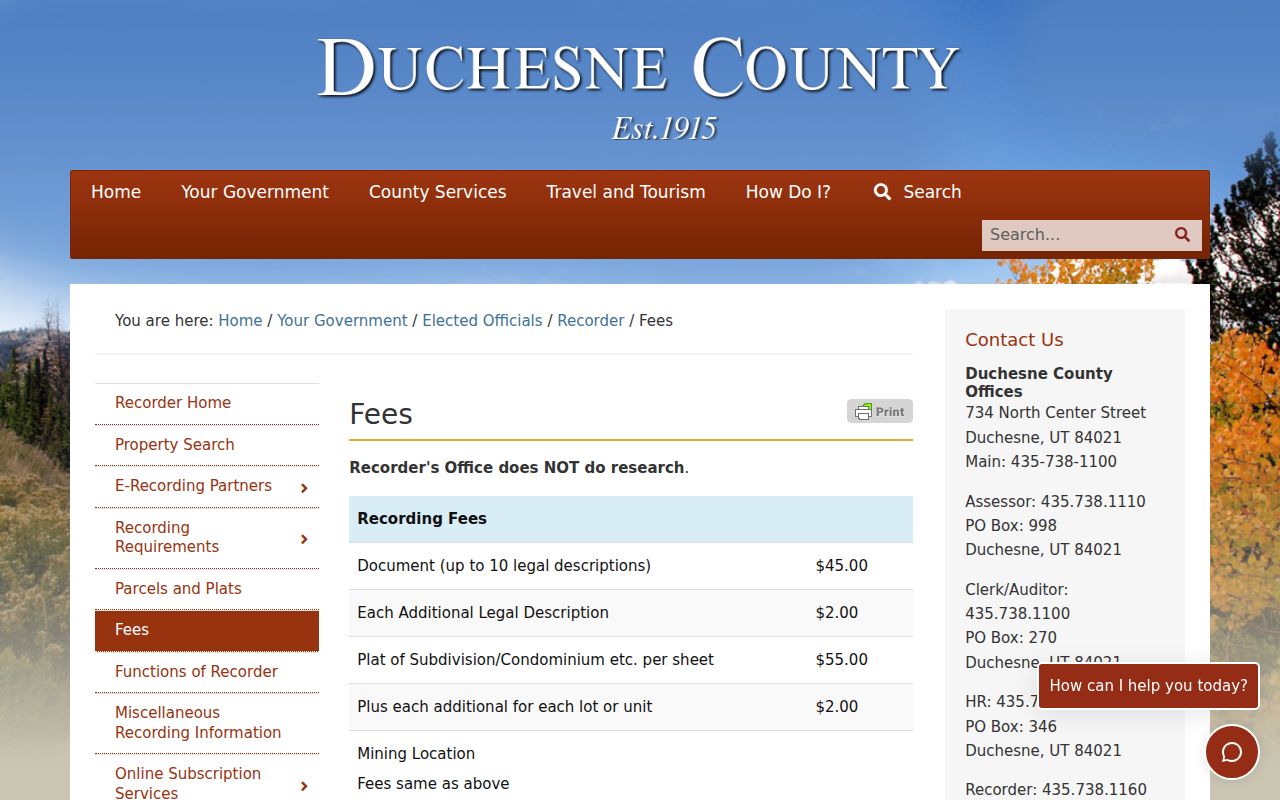
Use the official page to check for updates before sending payment or requesting certification.
Plats and Legal Descriptions Belong Beside Deeds
A deed's legal description anchors the question of which land the instrument covers. A subdivision deed may cite a lot, block, and recorded plat. An unplatted tract may turn on metes-and-bounds or government-survey language instead. The County Surveyor index lists Roosevelt Plat A through E. For Duchesne City it covers subdivisions, unplatted areas, and Blocks 1 through 18. Open each sheet title and recording reference from those indexes. Never invent a neighborhood name from a street address.
The Recorder checks each legal description and valid parcel number. Mapping staff maintain ownership maps and parcel abstract history. For dimensions, the county says a subdivision relies on its recorded survey plat. Unplatted land rests on the vesting deed. A later boundary agreement can shift the picture, so follow amendments and related instruments too. The Recorder's parcel and plat page explains the map access route.
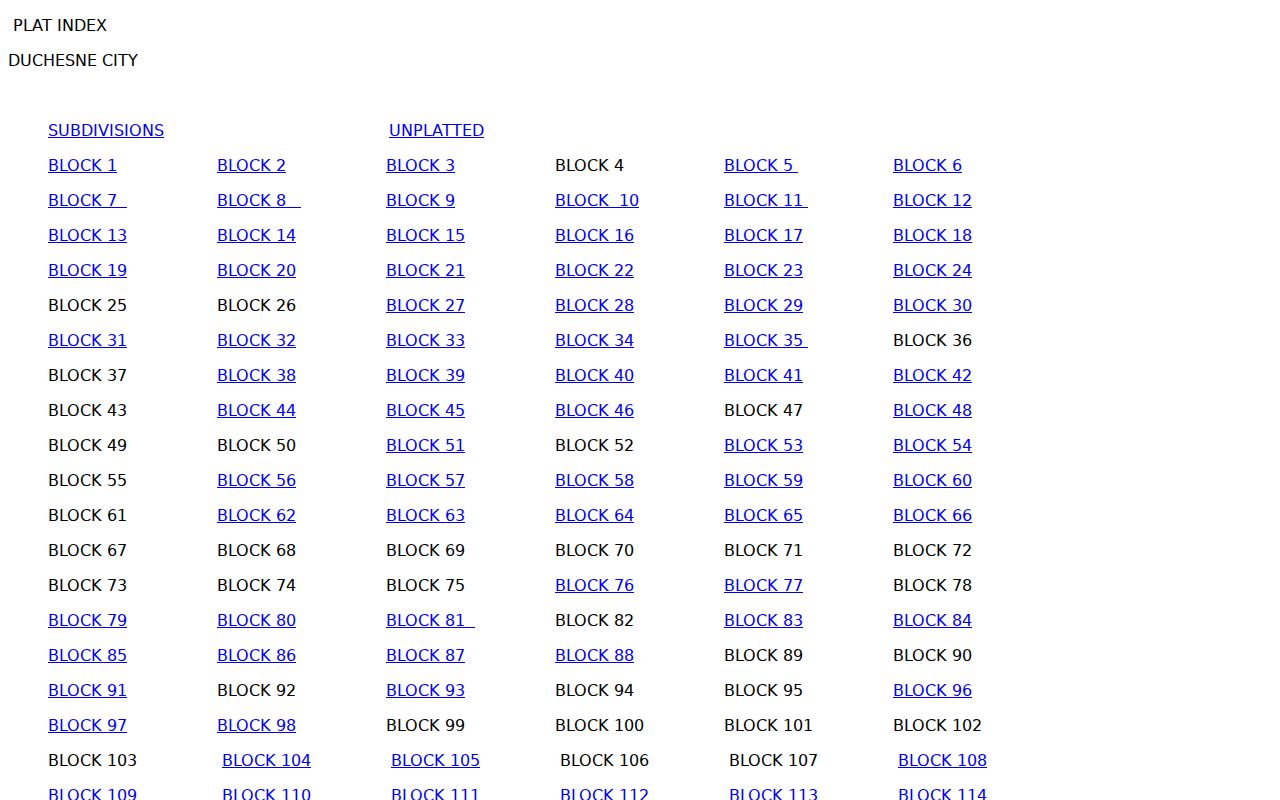
A recorded plat sheet can reveal the lot and block behind a modern street address.
Older Duchesne County Deeds May Reach Beyond the Online Index
How far back does the Duchesne County property records index reach? The Recorder does not say. Its public pages name no starting year and list no full deed-book inventory. Older documents are still being added, though. For pre-1915 instruments with low numbers, the asterisk search trick may help. When a chain of title hits a wall, ask the Recorder to search the relevant index or point you to the historical repository holding the next record. An online gap is not a records loss. No evidence points to a courthouse fire or a destroyed deed series in the county.
Early land transfers matter here more than almost anywhere. The Uintah Reservation dates to 1861. Homesteading on former reservation land began August 27, 1905, after allotments under the Dawes Act. A Duchesne deed chain can therefore cross federal patents, allotment records, surveys, and county instruments in one search. Utah Archives and local history collections add useful context. Still, verify recorded ownership against the Recorder's source documents, since only those records carry legal weight. County history provides the reservation and homesteading dates.
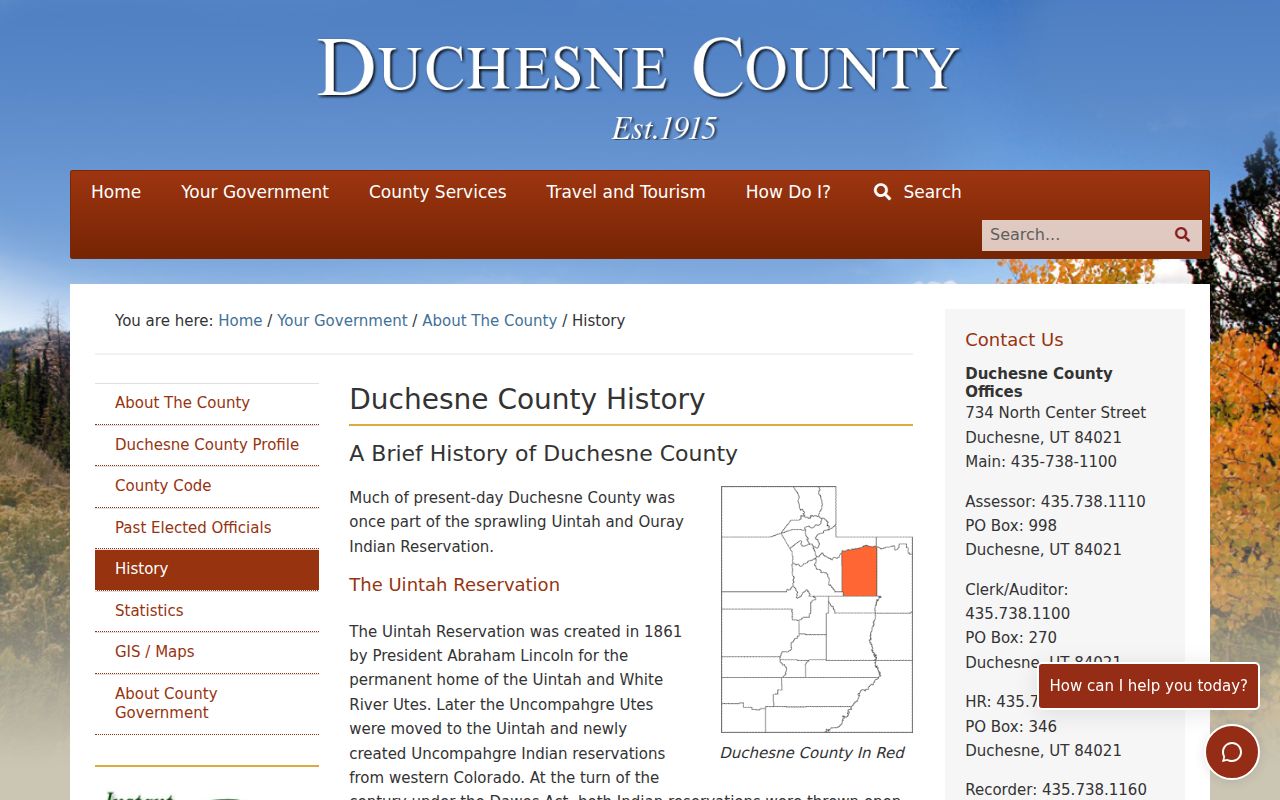
For family clues, the History Center's obituary and cemetery projects are helpful leads. They are not ownership evidence, though; the Recorder's deed records remain the source of record.
Separate a Deed From a Mortgage, Lien, or Court Case
The Duchesne Recorder indexes a wide range of instruments, not just deeds. Mortgages and deeds of trust, assignments, releases, mechanics liens, judgments, tax liens, notices of default, easements, rights-of-way, covenants, affidavits, trust transfers, probate deeds, and amended or vacated plats can all carry the same names. A mortgage assignment moves the lender's interest to a new holder. A satisfaction or reconveyance can end it. Read the later release instead of assuming a lien died with a change in owner. A judgment may live in a court case, and it may also require a recorded abstract.
For court matters, Utah Courts Xchange offers public case summaries. Coverage extends to foreclosure, quiet title, partition, boundary disputes, lien enforcement, and tax collection. Electronic district documents filed since July 1, 2010 may be purchased. Most district courts provide courthouse terminals. Keep the tool in perspective. Xchange is not a title index, and a docket entry alone never proves the final status of a recorded interest. The Utah Courts coverage guide details what the service includes and where courthouse access is offered.
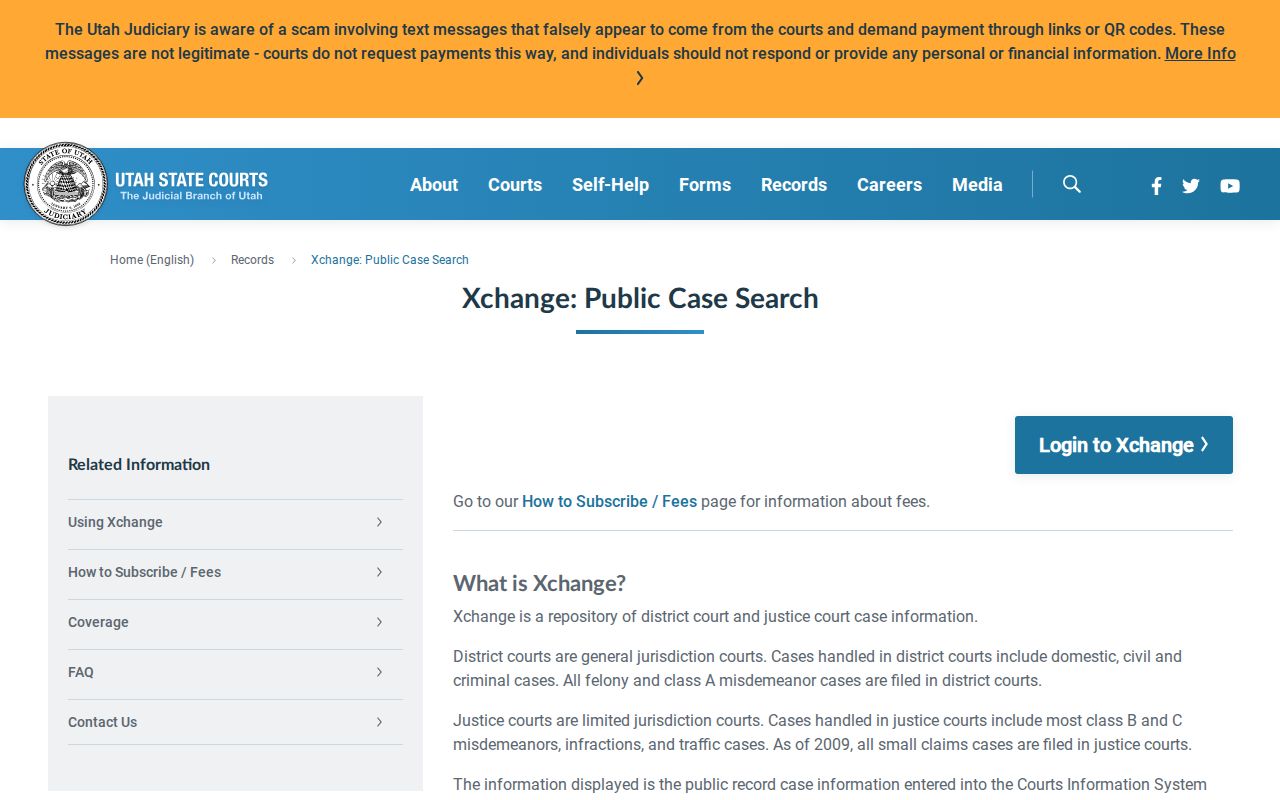
The coverage guide explains the court-record route only; it does not expand the Recorder's deed index. The Xchange public search landing page identifies guest access and account or payment choices.
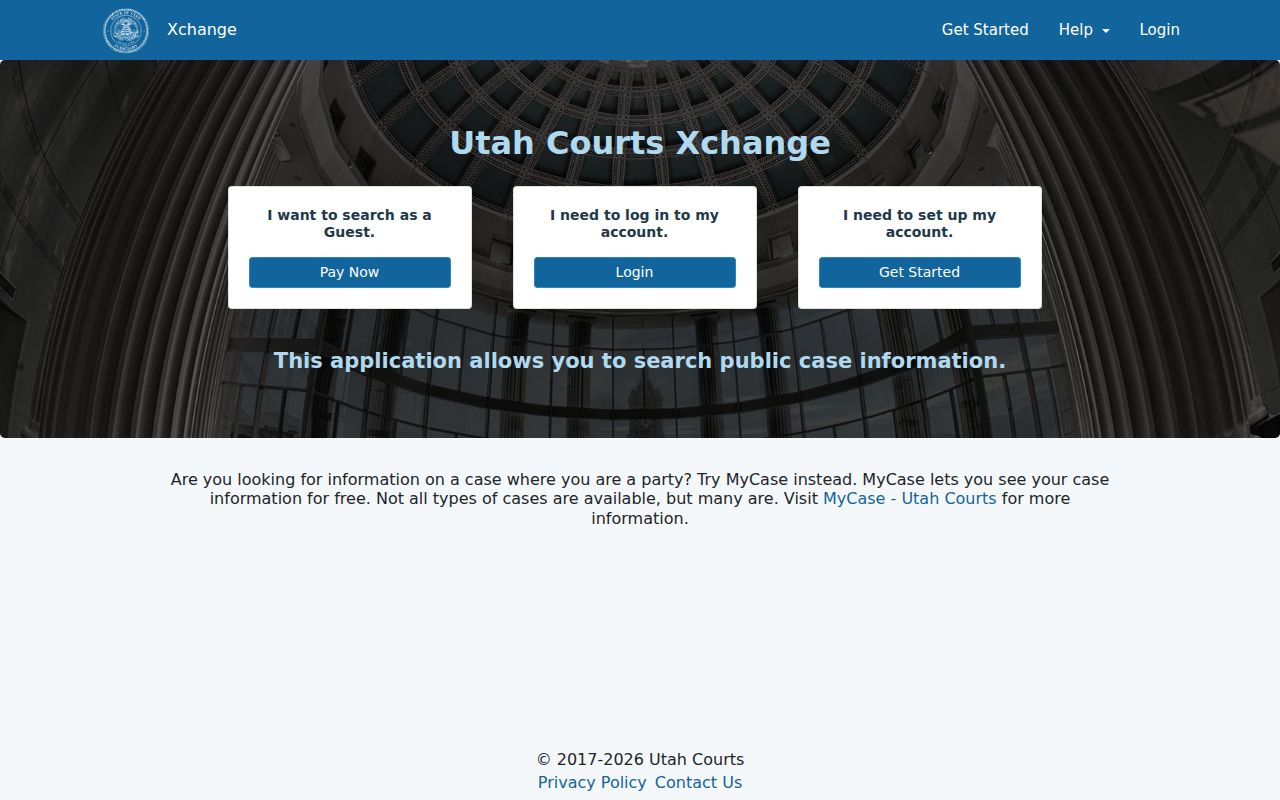
A case search is its own research step. Check any summary against the recorded release or judgment itself.
Getting a Copy of a Duchesne County Deed
The Recorder's OnBase link is the starting point for a copy. Search by party, parcel, or document reference inside its JavaScript interface. The Recorder does not publish a start year for its searchable coverage. When the instrument appears online, check the grantor, grantee, recording date, legal description, and parcel reference against what you expect. Save the image only after that check. Keep in mind that the Recorder validates legal descriptions and parcel numbers. Its index is not a substitute for a full title search.
A paper copy works differently. Contact or visit the Recorder at 734 N Center St. in Duchesne. You can also mail a specific document request to PO Box 916, Duchesne, UT 84021. Published copy charges are $1 per page for a deputy copy. The rate is $0.25 per legal or letter page, $0.50 for a ledger page, and $0.10 for a digital page. Certification adds $5 for the seal plus $1 per page. Include a self-addressed stamped return envelope with any mailed request. Recording a new document is a separate service from obtaining a copy. The county lists $45 to record up to ten legal descriptions. Additional descriptions are charged separately.
Recorded, not guaranteed. The Duchesne County deed index shows instruments in the Recorder's records, not every possible interest. The office does not perform a public title search, so use a title company for a full title commitment.