
The Values on a Duchesne County Property Record
The Assessor estimates fair market value for the annual roll. An estimate is not the market itself. State parcel data for Duchesne County may separate land market value from total market value, with improvement details where supplied. A deed documents one transfer. The Recorder's live interface publishes no guaranteed consideration field. No fixed assessment ratio appears in the county's data, and none can be applied safely to every parcel on the tax roll.
| Value | What It Is | Where |
|---|---|---|
| Assessor market value | Annual fair-market estimate using current market sales comparables | County Assessor roll |
| Taxable treatment | Value after applicable exemption or tax treatment; exact live labels not verified | Assessor / Clerk-Auditor |
| Recorded sale evidence | A particular conveyance and its recording details; consideration field not confirmed | Recorder deed index and image |
| Land / total market fields | Separate parcel attributes where supplied; improvement values may be included | Assessor / Utah SGID |
An annual market value is not an offer. It is not a professional appraisal either, and it promises nothing about what a buyer will pay. Exemptions can reduce taxable value, while a sale price belongs to one transaction on one date. Utah's public data includes tax-exempt type and primary-residence fields. No single ratio covers every parcel. Neither a countywide cap nor a universal rule applies to Duchesne County taxable values. For tax bills, relief, and appeal steps, turn to the separate Duchesne County property tax records guide.
Annual Market Updates and Five-Year Inspections
Duchesne County's Assessor updates real-property market values every year from current comparable sales. The office also inspects parcels in the field at least once every five years. Those are two separate events. The market analysis can change a value. Nobody may have inspected the structure that year. Inspection works the other way too. A field visit can confirm a property characteristic. It does not prove any recent sale price in Duchesne County records. No countywide revaluation reset date is published. The county quantifies no lag between a transaction and its assessment. Read the roll year shown. Before comparing values from different years, ask the Assessor which effective date applies. Then check the parcel attributes actually listed.
Looking Up a Duchesne County Property Value
Start with the parcel number. It is the most reliable handle on a Duchesne County property search. Without it, try the physical situs address in the county Assessor link and the Parcel Viewer. Confirm the result is the right parcel. Then read its roll date before drawing conclusions. State SGID layers add land and total market values, acreage, class, tax district, subdivision, structure size, floors, built year, and primary-residence status where supplied.
- Find the parcel through the County Assessor or GIS using its situs, parcel number, or legal description.
- Write down the land and total market values, class, acreage, and source year if those fields are shown.
- Compare a possible transaction with the deed and recording details, not just an assessor estimate.
- Keep the parcel's SGID as-of date and source metadata if you download statewide data.
- Assessor market value
- The annual fair-market estimate on the county roll.
- Taxable value
- The value subject to the tax calculation after applicable treatment.
- Sale / consideration price
- A transaction amount, if documented in the deed or associated record.
- Reassessment
- The Assessor's recurring review of parcel values using current market data.
State Parcel Data Separates Land and Total Value
Utah SGID's Duchesne County parcel inventory splits land market value from total market value. It carries much more. Acreage, property class, tax-exempt type, tax district, subdivision, building size, floors, house count, primary-residence status, and year built all appear where the source provides them. These fields make parcel comparisons easy. A missing field, though, does not mean the characteristic is absent. The basic parcel layer was updated in September 2025. The land-information-record layer followed in 2025. Keep the metadata when you export. CURRENT_ASOF, ASSESSOR_SRC, BOUNDARY_SRC, and DISCLAIMER identify the age and source of every value you compare. The SGID parcel page documents Utah's parcel feature services.
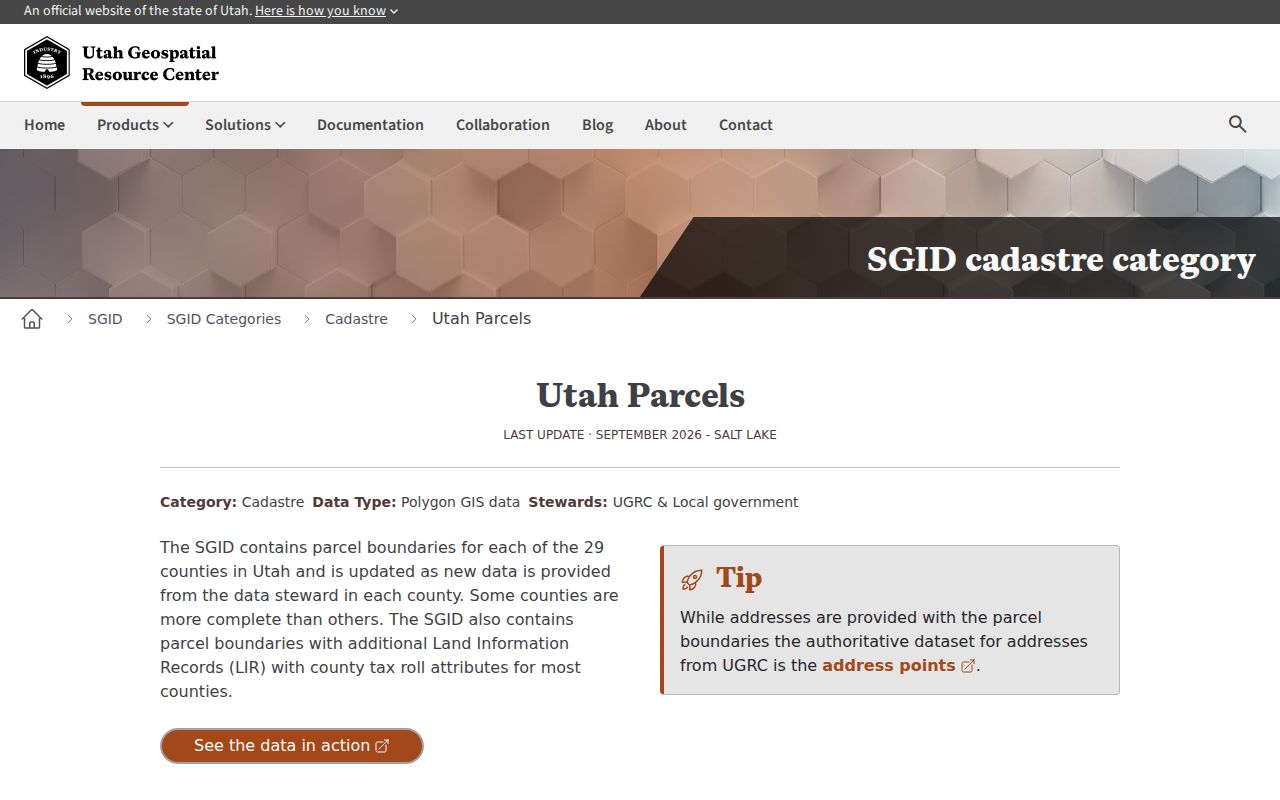
Verify the official roll with the county Assessor first.
A Recorded Sale and an Assessed Value Are Different Evidence
A deed names the parties and carries the legal description of a conveyance. It may include consideration language. The county's public Recorder page, though, exposes no guaranteed sale-price field and no result inventory for Duchesne County deed records. A sale price belongs to one deal. The Assessor's annual estimate is different evidence entirely. It is built from comparable sales and property characteristics, not from a single transaction. The tax selector returns a balance. That balance is neither kind of sale evidence. Before comparing a parcel to a prior sale, verify the deed still covers the same property after any split, merger, or boundary agreement. Not every conveyance is an open-market sale. And do not expect the deed amount to appear as a structured portal field. The Duchesne County deed records guide explains how to match a conveyance to its instrument and legal description.
Residence Relief Changes Tax Treatment, Not Market Evidence
Duchesne County's residential exemption ties tax treatment to domicile and primary-residence evidence. It changes the tax bill. It does not change the parcel's worth. SGID may carry a primary-residence indicator or a tax-exempt type where the county supplies it. Neither field is a second sale price. Confirm eligibility documents and current requirements with the Assessor. No fixed exemption ratio fits every property or every roll year, so keep the assessed market figure distinct from taxable treatment. Send bill and exemption questions to the county offices that administer those records. The county Assessor provides residential-exemption instructions.
Compare Parcels by the Same Local Features
Compare like with like. A vacant tract and an improved home sit on the same county roll. The same features do not explain both values. Keep acreage, property class, improvement size, year built, floors, tax district, and primary-residence status next to the land and total market values. Do this wherever those fields appear. Duchesne County records carry these details on the parcel. Matching them across parcels is what makes a comparison mean anything. SGID fields can narrow a list of similar parcels. The Assessor's current property record and valuation notice still control the local roll question.
Start with land in the same geographic and record context. Note the subdivision or unplatted description, tax district, acreage, and class. Also note building size, built year, and the split between land value and total value. Neighborhood labels are recorded differently across the county's cities. Roosevelt Plat A through E and Duchesne City's block and subdivision index show that plainly. Myton publishes no named subdivision roster. Rely on its parcel and plat references instead of inventing a neighborhood category.
Legal description beats map placement. A rural vacant tract should not be read against a developed city lot. Account for size, improvement, access, and legal description. A GIS map helps you place the parcel. It does not settle the parcel's legal dimensions or its permitted use.
The Appeal Record Is Evidence About a Valuation Dispute
The County Board of Equalization hears locally assessed market-value appeals. The county says only market value is appealable. The instructions ask for property identification, the Assessor's value, the taxpayer's estimate, and evidence. That appeal file can explain a disagreement about the annual roll. It does not turn the Assessor value into a sale appraisal. Deadlines, appointments, and relief procedures shift from year to year. The county's live instructions and the separate tax-records guide are the dependable sources.
Evidence should identify the subject property and any comparables by matching parcel descriptions. The Board page provides the current appeal instructions. Check it before filing anything.
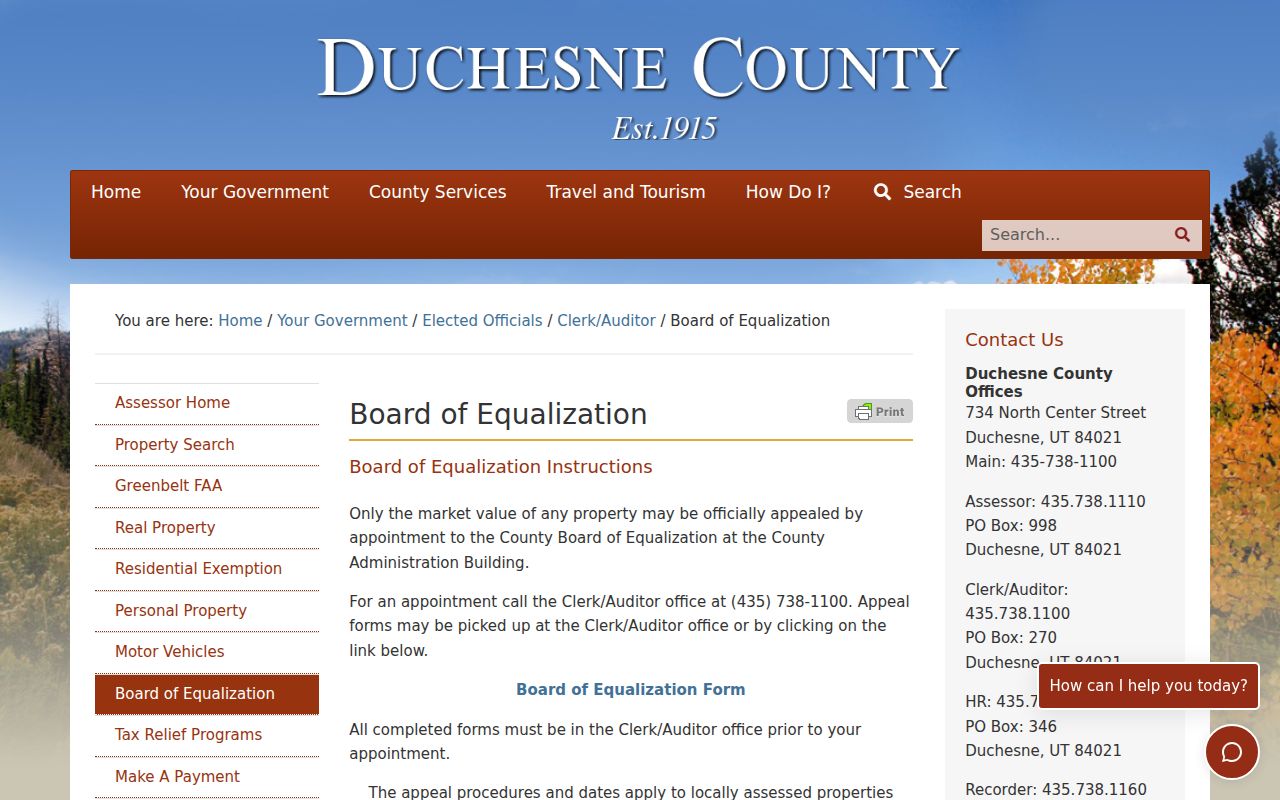
Deadlines live on the current appeal page. This section focuses on what the valuation evidence actually means.
What a Duchesne County Assessor Value Is Not
The county says the Assessor updates parcel values annually from current market sales comparables. Each parcel is physically inspected at least every five years. An annual roll is a countywide valuation process. It is not a fresh inspection or appraisal for every buyer. Construction changes, a parcel split, a sale, or a shift in land-use status may show up on different schedules. The county publishes no quantified lag and no parcel-specific appraisal result. Treat the Assessor value as a roll figure, not a sale appraisal.
Value vs price. A Duchesne County Assessor value is prepared for the annual property roll and is not a prediction of sale price or an appraisal for a transaction. Seek a qualified appraiser for a valuation decision.