
What the Duchesne County Current Owner Record Shows
Figuring out who owns a property in Duchesne County takes two records, not one. The Assessor keeps the owner of record on its annual roll. The Recorder holds the deed that actually transferred title. A quick property search can pull a name fast. But names can be trusts, estates, or companies. A mailing address rarely matches the situs address. Compare the roll entry against the newest recorded deed before trusting either alone. A title record tells you who holds the property, not who lives there. Keeping those ideas apart saves trouble later.
| Owner of record | Assessor roll name or deed grantee; compare the source and date |
|---|---|
| Vesting | How the deed names the grantee, including a trust or fiduciary |
| Mailing address | Address used for tax notices, which may differ from the site |
| Situs | Physical address of a habitable structure when one is assigned |
| Parcel and legal description | Keys for matching the roll with the recorded instrument |
| Recording date | Date the instrument entered the Recorder's index, distinct from execution |
An owner-of-record entry says nothing about occupancy. The mailing address helps you align tax records, not assume residency. Dates diverge too. A deed's execution date, its recording date, the roll year, and the tax notice date can all differ. Keep each date distinct rather than collapsing them into one claim about when ownership changed.
Why the Current Owner Name May Lag the Latest Deed
The Assessor updates market values once a year. The county publishes no fixed number of days between a deed recording and an owner-name update. A deed recording does not trigger an instant name change. At the Recorder, the instrument gets validated, and its parcel and legal description checked. Then it is scanned and indexed. Ownership mapping and the parcel abstract history catch up afterward. That sequence explains why a recorded transfer can sit ahead of the tax roll. Check the recording date printed on the deed against the roll's year or update date. If the newest deed is absent from the Assessor's view, ask whether a roll change is pending. Ask too whether the Recorder holds a later correction. Treat any gap as ordinary processing, not a proven county lag. The Recorder describes its indexing and map-update work.
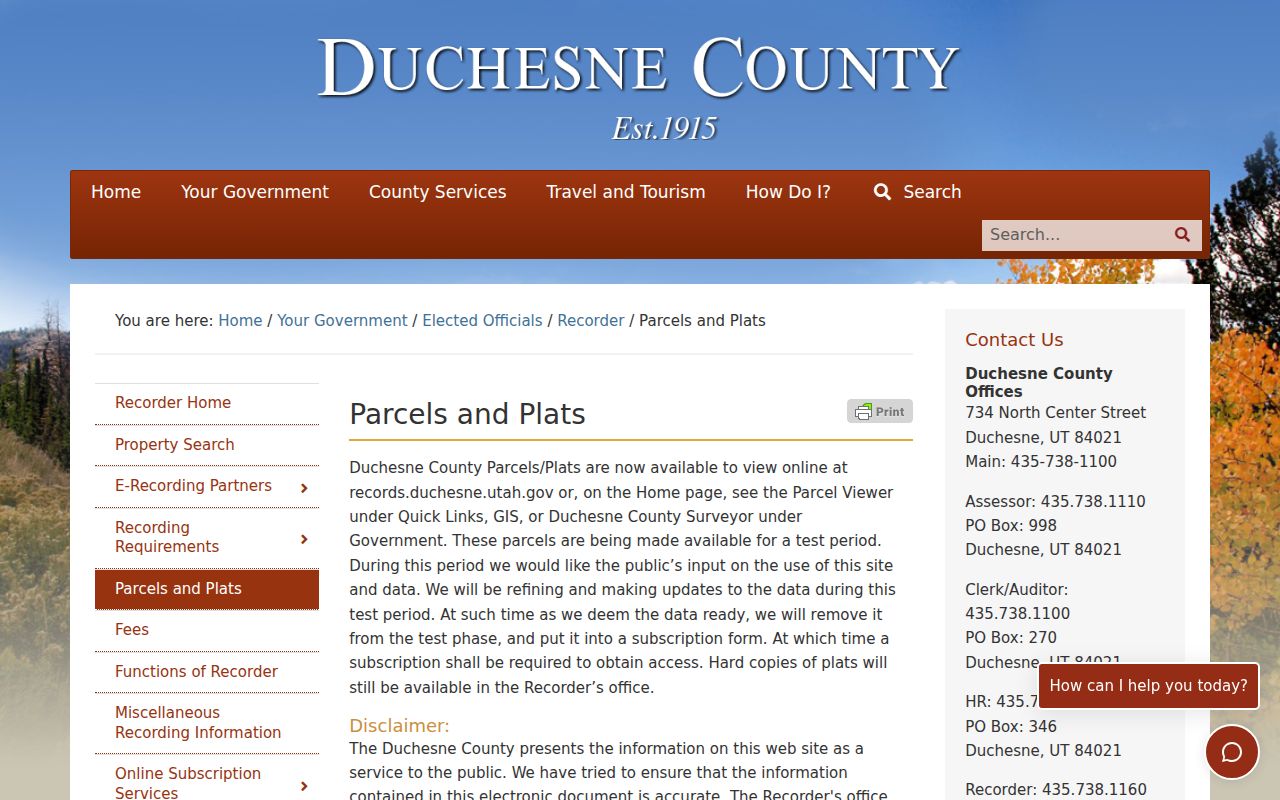
Confirm the newest instrument itself before treating a roll name as the final owner.
Confirming the Current Owner in Duchesne County
Start with the Assessor entry. Then confirm the latest vesting instrument with the Recorder. The county's records workflow checks legal descriptions and parcel numbers, updates ownership maps, and adds parcel abstract history to the current tax roll. So a recorded deed can surface before a later roll update, and the county posts no fixed lag time. Compare recording order and the actual instrument. A delayed roll entry never means the deed failed.
- Find the parcel through the Assessor or GIS and write down the legal description and roll date.
- Open Recorder OnBase and locate the newest deed matching that parcel and description.
- Read the grantee, vesting language, execution date, and recording date on the document.
- Check later corrections, estate deeds, or split instruments before treating the name as final.
- Owner of record
- The person or entity named in the county's ownership record.
- Vesting
- The capacity or form in which a grantee holds title, as written in the deed.
- Occupant
- A person present at the property; occupancy is not established by the tax roll.
- Registered agent
- An entity's official contact for service, not necessarily its owner or parcel decision-maker.
Vacant Parcels Can Have an Owner but No Situs Address
Duchesne County assigns physical addresses only to habitable structures such as homes, cabins, and offices. That happens only during the permit process. Vacant tracts and recreational vehicles get none. Notices go to the owner's mailing address instead, and the county grid is centered in Roosevelt. So an address-based property search can fail. It can fail even where the Assessor and Treasurer both keep full parcel records. Work from the parcel ID, legal description, subdivision, or owner name on a deed or tax notice. Keep situs, mailing, and ZIP details separate in your notes. Postal geography does not set municipal limits. A parcel near Roosevelt's Uintah County edge deserves a check against the county boundary. Use the GIS map for that. The physical-address page explains how structures receive addresses.
Use the parcel number as the stable cross-reference when a street address is absent.
Trust and Estate Vesting Needs More Than a Name Match
The current owner may be a trustee, trust, LLC, corporation, personal representative, or estate. Read the deed's vesting language closely. Then look for later instruments that distribute the property or swap the fiduciary. Utah's Division of Corporations verifies business-entity filings. A registered agent is not necessarily the beneficial owner, though. The agent may not be the person who can decide a parcel's fate. A death may explain the transfer. Pair the recorded personal-representative or heir deed with the public probate summary in Utah Courts Xchange. Some court matters stay sealed or restricted. The County History Center's obituary, cemetery, and family-history collections can surface a surname or a date. But that is historical research, not title proof. The State Division of Corporations is the official entity registry.
The Tax Selector Confirms an Account, Not Title
The Treasurer's parcel selector takes the parcel number in three segments and returns an account-name check, an amount due, and an amount to pay. It confirms the tax account matches the property number. Nothing more. The county does not present it as an ownership registry, and a payment record cannot stand in for the newest vesting deed. Use the deed for title evidence. Use the Treasurer for taxes owed. If the account name and the deed grantee differ, compare the legal description and the record dates. A recent transfer may simply not have reached the roll yet. Call the Treasurer to verify any delinquent amount rather than trusting a stale result. The parcel selector's result includes account-name and payment fields.
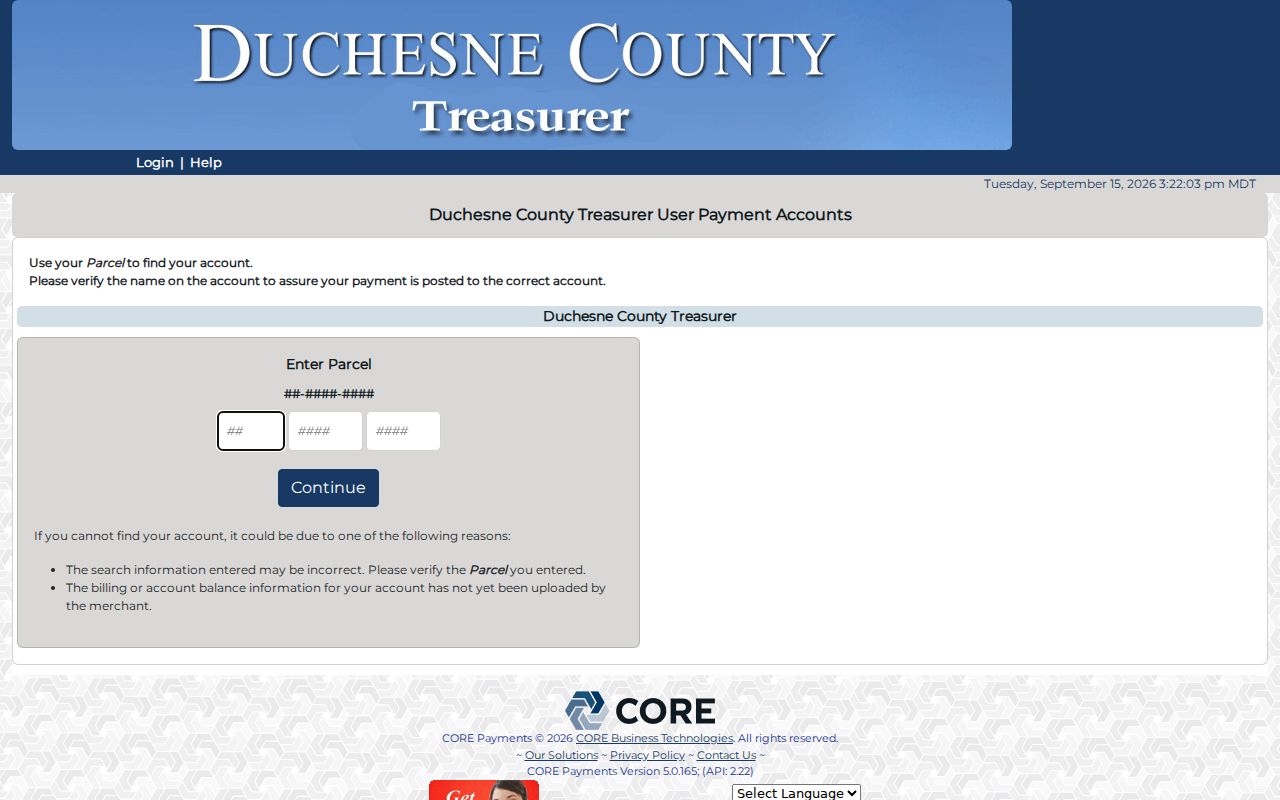
Keep the account screen with your parcel reference, but label it clearly as a tax source.
How to Interpret a Duchesne County Owner Mailing Field
A tax mailing address shows where the county sends its notices. It does not prove where a person lives. Vacant land often carries no physical address at all. A mailing location can sit outside Duchesne County. Treat the field as context for the county property record or a legitimate transaction, nothing more. Utah keeps voter data under separate privacy rules, with protected identifiers and safeguards for voters who qualify as at-risk.
Name changes call for comparison work. Match the newest assessor entry against the recorded instrument date and the legal description. The Recorder checks instruments for parcel-number and legal-description consistency. Then it indexes them and updates ownership maps plus the parcel abstract history. No fixed turnaround for that update has been published. A fresh deed can sit on file as the latest ownership document. A tax notice may still show the older roll entry. That is normal lag rather than a conflict.
Hard-to-find deed results have a practical fix. Keep the document number handy. Ask the Recorder whether it is indexed under a prior party, an entity, or a corrected description. The online archive's start date is not published, and older documents keep being added. A blank result is a prompt to ask about an older volume or a copy. It is not evidence that no transfer was ever recorded.
Older short document numbers get special handling in the Recorder's search instructions. Numbers under six digits, including pre-1915 references such as *5321, take a leading asterisk. For a sequential range, the final digit can be swapped for an asterisk. That hint helps when you pull records on a long-held parcel. It gives no coverage date. It also gives no assurance that an earlier owner of record lacks unrecorded interests.
Lawful use. Use owner-of-record data for property diligence and lawful record verification. Do not use names or mailing details to stalk, threaten, or harass anyone.