
What Duchesne County Property Tax Records Show
Each record answers a different question. The Assessor's figure is an annual market valuation. An exemption can change taxable treatment. The Treasurer's account shows what is owed or paid. Keep the documents straight. A tax notice is not a deed. A market-value field is not a sale price. The exact field labels on the Assessor's live results can vary. So treat the categories here as a guide, and confirm names in the county's own interface before relying on them.
| Field | What It Shows | Where |
|---|---|---|
| Market value | Assessor's annual fair-market estimate based on current sales comparables | County Assessor |
| Exemption status | Residence or other relief treatment where the property qualifies | Assessor / Clerk-Auditor |
| Account balance | Amount due and amount to pay for the selected parcel account | County Treasurer |
| Tax district | Levy and service geography that helps explain the bill | GIS / tax record |
| Delinquency | Listed account and property-tax lien information | Treasurer / Clerk-Auditor |
The Assessor determines fair market value. That figure is refreshed each year from current market sales. Levies, exemptions, and payment status all shape the bill the Treasurer calculates and collects. A recorded deed proves a transaction happened. It does not guarantee a sale-price figure, since the Recorder portal exposes no sale-consideration field. For help decoding each number, see the Duchesne County property value guide.
Assessment and Collection Are Separate County Jobs
Assessment and collection sit with different offices. The Assessor values every real-property parcel each year using current market sales comparables. The office also physically inspects parcels at least once every five years. The Treasurer collects the real-property tax. The Treasurer answers balance questions on any account. Mobile-home and business personal-property taxes also flow through the Assessor. They are not part of the real-property bill. A value question and a payment question do not belong at the same counter by default.
Countywide parcel data can carry land market value, total market value, class, acreage, tax district, and exemption indicators. This applies when the values are supplied. The exact screen labels on the Assessor's site are best confirmed in the live portal. The same goes for the search controls. Ask the office directly when a category or year is unclear.
Looking Up a Duchesne County Tax Bill
The Treasurer's account selector works from the parcel identifier alone. You enter it in three boxes, formatted ##-####-####. The result shows a parcel and account-name check, an amount due, and an amount to pay. It also lets you add another parcel to one payment. No address-based tax selector is documented. Start with the Assessor or GIS when an address is all you have.
- Locate the parcel number in the Assessor record or county GIS and copy all three segments.
- Enter the number in the Treasurer selector and compare the account name to the property record.
- Review the displayed amount due and amount to pay; check processor limits and fees before submitting.
- Use the delinquent list and Clerk-Auditor sale notice for liens or auction status, then confirm directly with the county.
- Market value
- The Assessor's estimate of the property's fair-market value for the annual roll.
- Tax levy
- The taxing authority's rate or amount used with taxable value to fund services.
- Residential exemption
- A tax treatment tied to qualifying primary-residence domicile and evidence.
- Tax lien
- A claim associated with unpaid property taxes; verify status with the Treasurer.
The Treasurer selector separates the parcel entry from the balance result.
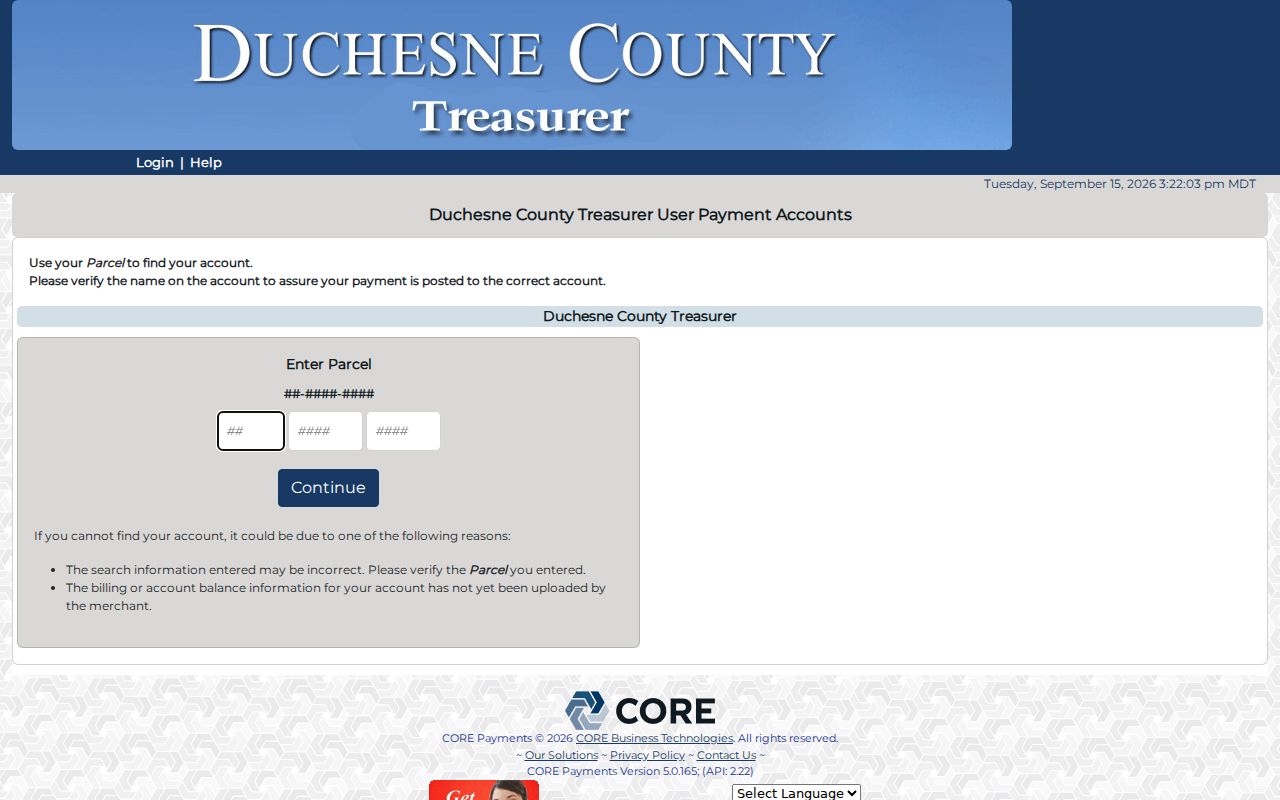
The pictured controls are a payment lookup, not an Assessor search or title record.
Duchesne County Property Tax Dates and Payment Channels
The Treasurer mails real-property tax notices by November 1. Payment is due November 30, and when that date lands on a weekend it moves to the following Monday. You can pay online or by phone with a card, by e-check, by mail to PO Box 989, or in person at 734 N Center Street. Card processing generally runs 2.5 percent with published minimums, while e-check is free from October 1 through November 30. Confirm any current fee or limit on the live payment page before you authorize anything.
Prepayment coupons come out around February 1. The nine-month auto-pay program does not cover delinquent taxes. A late account should go straight to the Treasurer at 435-738-1190, since an online result may lag a recent posting. Keep the notice and payment confirmation with the parcel number so any later review lands on the same account.
On the payment page, the amount due is separate from the amount you choose to submit, and you can add another parcel to the transaction. A card receipt documents the payment itself. It does not verify the owner of record or the deed description behind it.
Residential Exemption and Tax Relief Need Their Own Review
Duchesne County's residential exemption turns on domicile. The Assessor wants primary-residence evidence. No single document guarantees a result. Ask the office for its current documentation requirements. An exemption changes tax treatment only, never the deed's ownership wording. A mailing address by itself proves nothing about where an owner lives.
Tax relief works differently. The Clerk-Auditor's programs carry a September 1 deadline in the county instructions. Hardship, disability, and circuit-breaker relief each have their own eligibility rules and 2026 amounts. Check the current program page and application form rather than carrying an old threshold into a new year. A market-value appeal is a separate path to the Board of Equalization.
Keep the two tracks apart. An exemption or relief application concerns qualifying tax treatment or household circumstances, while a value appeal challenges the Assessor's market-value conclusion, and neither alters the grantor and grantee written into the deed. The Assessor handles exemption evidence, the Clerk-Auditor administers relief, and the Treasurer confirms the account balance once those decisions land.
Start with the county's residential exemption instructions. Verify domicile evidence with the Assessor directly.
Delinquent Lists and Tax Liens Need a Parcel Cross-Check
The Treasurer's delinquent property-tax material names persons, tax account numbers, and property-tax liens. A 2024 list described interest accruing after January 31, 2025 under Utah Code sections 59-2-1331 and 59-2-1332.5. That example is historical. The newest county list carries current accounts and dates. Match the parcel and account, not the name. A delinquent entry is not a title search. Tax liens, mortgages, judgments, and releases may sit in separate county and court records. Confirm current status with the Treasurer, then inspect the Recorder index for recorded instruments. The county delinquent-property list explains the published tax-lien information.
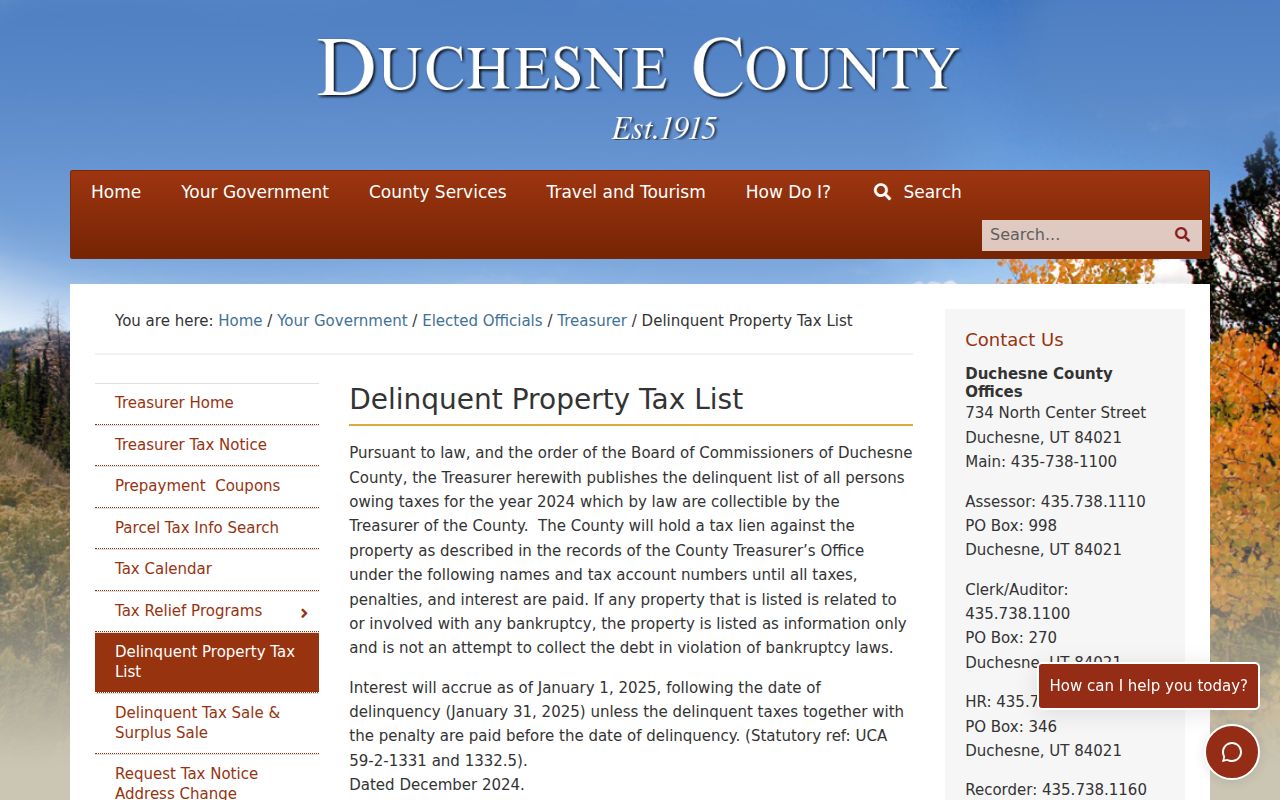
Pull the latest delinquent roll, then verify the parcel's standing through the Treasurer's account selector.
The 2026 Online Tax Sale Is a Past-Cycle Example
Duchesne County scheduled its 2026 tax sale for May 28 through Public Surplus. That date has passed. The notice required a bid on the entire parcel. It barred offers below taxes, interest, penalties, and administrative costs. Payment was due within five business days. Bidders paid an 8 percent buyer premium, a $1 minimum, and a $340 administrative cost per listed property. Joined parcels sometimes shared one cost. Redemption closed at 5 p.m. on the business day before the notice date.
Collusive bidding is prohibited. The rules also describe conflicts for people or entities owing property taxes. Unsold property may be sold or struck to the county. The web list is a courtesy, the county says, not an official sale list. Verify details with the Clerk-Auditor and Treasurer. Never assume the same terms for a later auction. The Clerk-Auditor's sale page holds the official cycle notice.
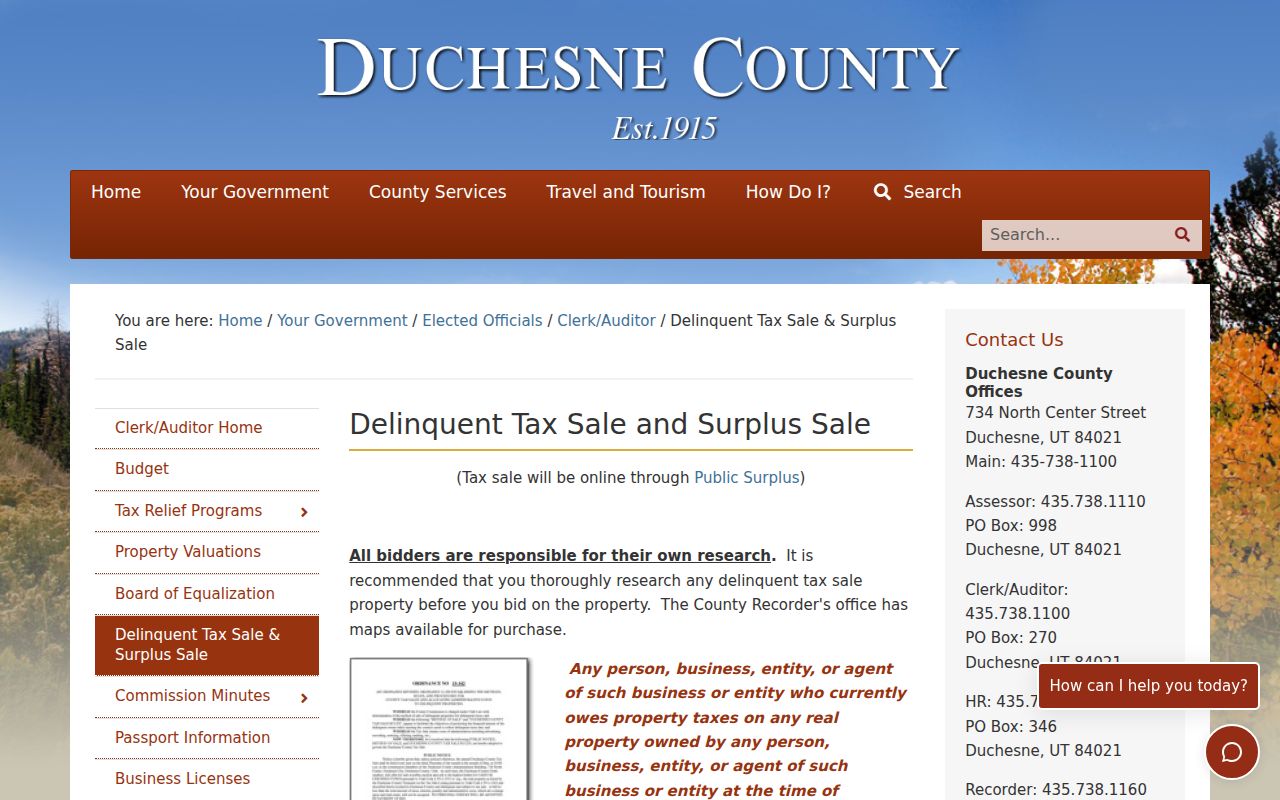
Read the current official notice before making any decision about a later sale.
Appealing a Duchesne County Assessment
The Board of Equalization hears appeals of locally assessed market value. Only market value is appealable, the county says. Follow the annual notice and current Clerk-Auditor instructions for the filing window and appointment. The form asks for property identification, the Assessor's value, your estimate, and supporting evidence. Compare similar sales instead of disputing the tax bill. Facts beat frustration.
Organize evidence by the characteristics that drive market comparison: parcel description, acreage, class, improvements, sale date, and the sale's relationship to the subject. Check that a comparable deed describes the same kind of property. It should have been recorded near the assessment date. A tax balance dispute is not a market-value appeal. Nor is a disagreement with the tax rate. The annual notice controls the current appointment and filing steps.
Appeal window. Use the deadline in the current county notice and arrange the required appointment. The county's appeal page links to its form and instructions; do not rely on a prior year's calendar.
The captured instructions are on the Board of Equalization page.
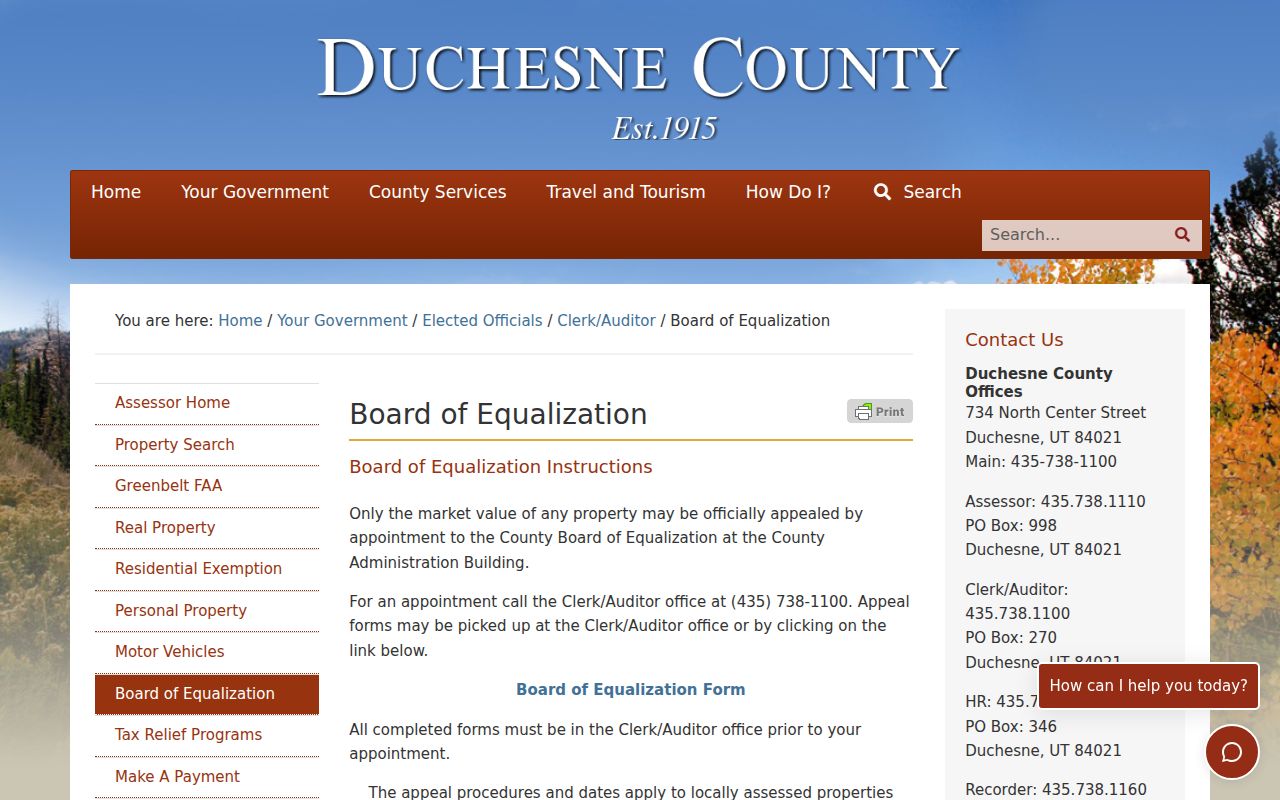
Gather the appeal form, valuation notice, and any evidence you have.