
How to Find Who Owns a Duchesne County Property
Start from the parcel, not from an assumption about who lives at the address. The Assessor and the Parcel Viewer both offer an owner-of-record clue. Then verify the newest vesting deed in Recorder OnBase. That recorded instrument settles the name. The county does not say whether owner-name or street searches accept partial matches. Exact terms work best. Addresses fail sometimes. When one does, fall back on the parcel number, the legal description, the subdivision, or an owner name copied from an existing notice or deed.
- Locate the parcel by its situs address if it has one; switch keys if the land is vacant or rural.
- Record the assessor's owner-of-record name, parcel ID, mailing address, and legal description as separate fields.
- Find the newest Recorder deed matching that parcel description and compare its grantee and recording date.
- If the grantee is an LLC, corporation, trust, or estate, follow the recorded entity or fiduciary name without inferring an individual owner.
- Check tax, GIS, and permit records only for the separate question each can answer.
Confirm the Current Name in the Recorded Instrument
The Assessor's newest name is only a lead. The Recorder's deed is the document that names the grantee in a specific transfer. Put the two side by side. Compare the recording date, the legal description, the parcel number, and every named party. A closing or estate transfer can appear in OnBase before the next assessor roll catches up. Mapping staff update ownership maps after recording. The county publishes no fixed lag for those updates. The gap is rarely an error. When the deed and the roll disagree, look for a correction, a partial transfer, a trust conveyance, a personal-representative deed, or a parcel split. Ask the Recorder or Assessor what update is pending, and keep the instrument number with your notes.
Where Duchesne County Owner Information Comes From
No single office answers every ownership question. The Assessor's roll supplies the owner of record plus valuation context. A recorded deed shows the grantee in one instrument. GIS pinpoints the parcel. The Treasurer account tracks taxes rather than title, so use each source for its proper job and carry the parcel or legal description across systems.
| Source | Owner Info It Gives | Access |
|---|---|---|
| Assessor roll | Owner-of-record and mailing context with parcel and value fields where supplied | County Assessor link; live fields need verification |
| Recorder deed index | Grantor, grantee, document type, recording details, and deed image if available | OnBase; coverage and image access vary |
| Treasurer account | Parcel-account name check and tax balance | Three-part parcel selector |
| GIS viewer | Parcel polygon, subdivision and zoning context | County Parcel Viewer; not title evidence |
| State business registry | Entity status and filing context for a named business | Utah Division of Corporations; verify exact entity |
The owner of record is not always the occupant. A tax mailing address can point somewhere else entirely. The parcel may sit vacant, or the roll may carry a trust or LLC name instead of a person's. A mailing field is a matching clue. It proves nothing about who lives on the land. Treat it as a record detail, never as a way to reach someone for an unrelated reason.
Read the whole vesting instrument, not just the name line. A deed can transfer only a stated interest. It can describe a partial tract, correct an earlier instrument, or place title in a trust or fiduciary capacity, so compare the recording reference and legal description against the current parcel. A shared surname alone connects nothing. If a spouse, co-owner, trustee, or personal representative appears, keep that capacity exactly as recorded. Reducing the entry to one presumed individual can distort the ownership picture.
The Recorder indexes deeds and related documents. It does not perform a public title search, and some liens or judgments live in separate court or agency records. A search result can identify an apparent grantee without showing that every interest was found or released. Lean on the Recorder for the instrument. Lean on the Assessor for the tax-roll name, and call a title professional when you need a complete ownership opinion.
For an unusual transfer, read past the deed. A mortgage, assignment, release, probate order, boundary agreement, or corrective deed answers a different question than the ownership transfer itself. The next instrument often explains the oddity. Utah Courts Xchange can surface a civil case summary. Before treating a court event as a title change, connect that docket to the Recorder's land document.
Vacant Land Can Defeat an Address-Only Owner Lookup
County Building Safety assigns physical addresses to habitable structures through the permit process. Vacant parcels and recreational vehicles get none. The owner's mailing address may then be the only address tied to a tax notice. The county's address grid centers on Roosevelt. A street search that yields nothing still leaves you options. Switch to the parcel number, the subdivision, the lot and block, or the legal description. A missing situs does not close the record. The land can still carry a tax account and a full record history. ZIP geography adds another wrinkle. A Myton or Roosevelt mailing city proves nothing about municipal jurisdiction. Use county GIS and the current boundary source to decide whether a city permit desk or the county building office holds the project file. The county's address page documents the Roosevelt-centered grid.
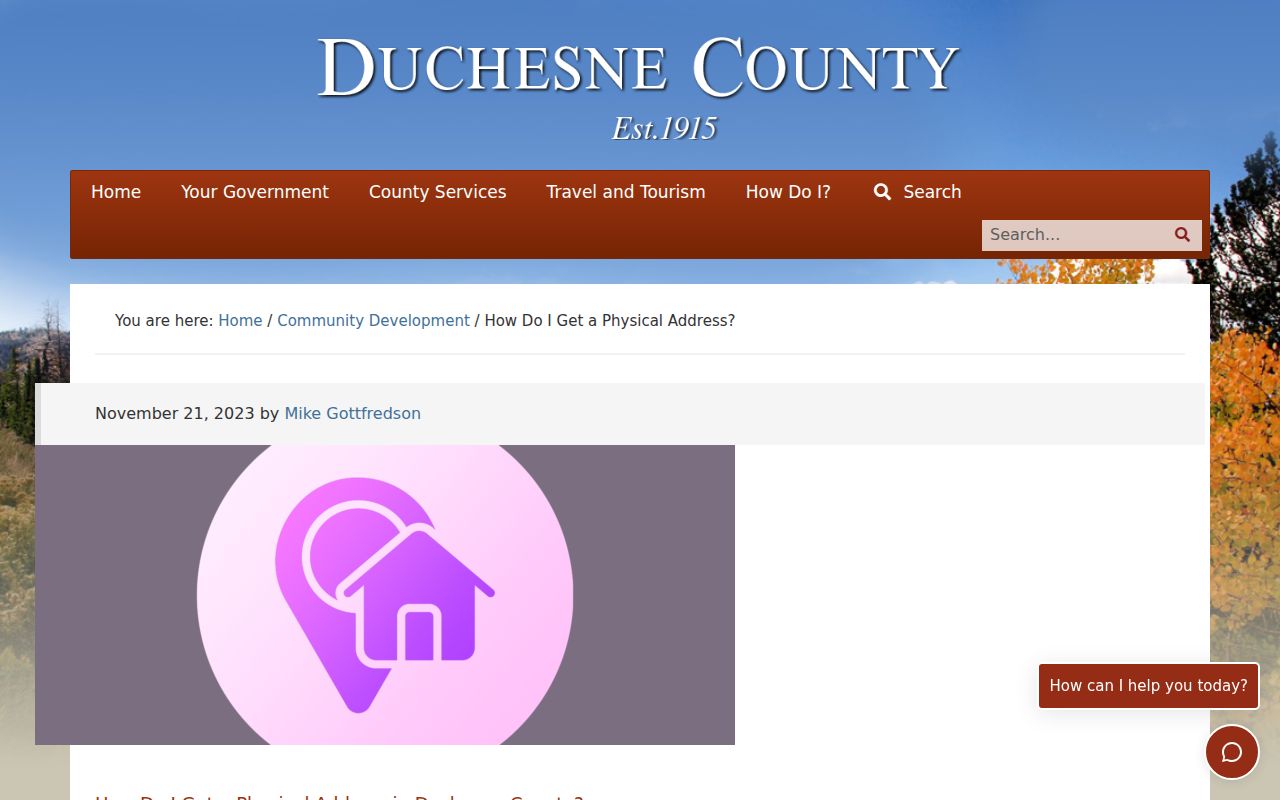
Keep situs, postal city, and owner mailing address in separate fields when matching records.
Legal Entities and Estate Transfers May Hold Title
Title in Duchesne County sometimes sits with a company, a trust, a trustee, or a personal representative. It can also sit with an estate. The owner of record is not always a person. Search the exact name as indexed in the deed records. Then trace later conveyances that redistribute or change title. Utah's official business registry is maintained by the Division of Corporations. That registry is the right place to check an entity's status and filings. Registration alone proves nothing, though, about who owns a particular parcel. It says nothing about who holds authority over it.
Probate deserves a two-part read. Pair the deed with the court file. Xchange offers public case summaries, while restricted filings stay sealed. A personal representative's deed can explain why the assessor name changed without any ordinary sale. So can an estate distribution.
Use the Map to Match a Parcel, Not to Identify a Person
The Duchesne County GIS viewer works well for confirming that a candidate parcel matches a street, subdivision, or zoning district. Its pop-up can nudge you toward a parcel number. But the county documents no owner-search function on the map, and it warns that parcel lines are not surveyed boundaries. Before trusting a map result, compare the legal description in the Assessor roll against the Recorder deed. The Duchesne County Parcel Viewer provides map context.
GIS never proves occupancy. A mapped parcel plus its owner-of-record name tells you nothing about who lives there. Ownership questions go back to the latest deed. Property lines call for a surveyor.
Treat the polygon as an index to county records, never as proof of who occupies the land.
Some Personal Details Stay Protected
Property records in Duchesne County routinely list names, legal descriptions, parcel identifiers, and mailing addresses. Land and tax administration require them. Voter records work under different limits. Full date of birth, phone, email, signature, driver-license or ID number, and Social Security number all stay protected. Qualifying at-risk voters may be anonymized or withheld entirely. A public-record lookup should never grow into a hunt for protected contact details.
Use the public voter portal only for its own status and election-data purposes. Utah's Safe at Home program is a separate route for eligible people seeking address confidentiality. The county offers no local property-fraud alert signup. So no county monitoring of title changes should be assumed. Vote.Utah.gov explains the voter lookup and privacy protections.
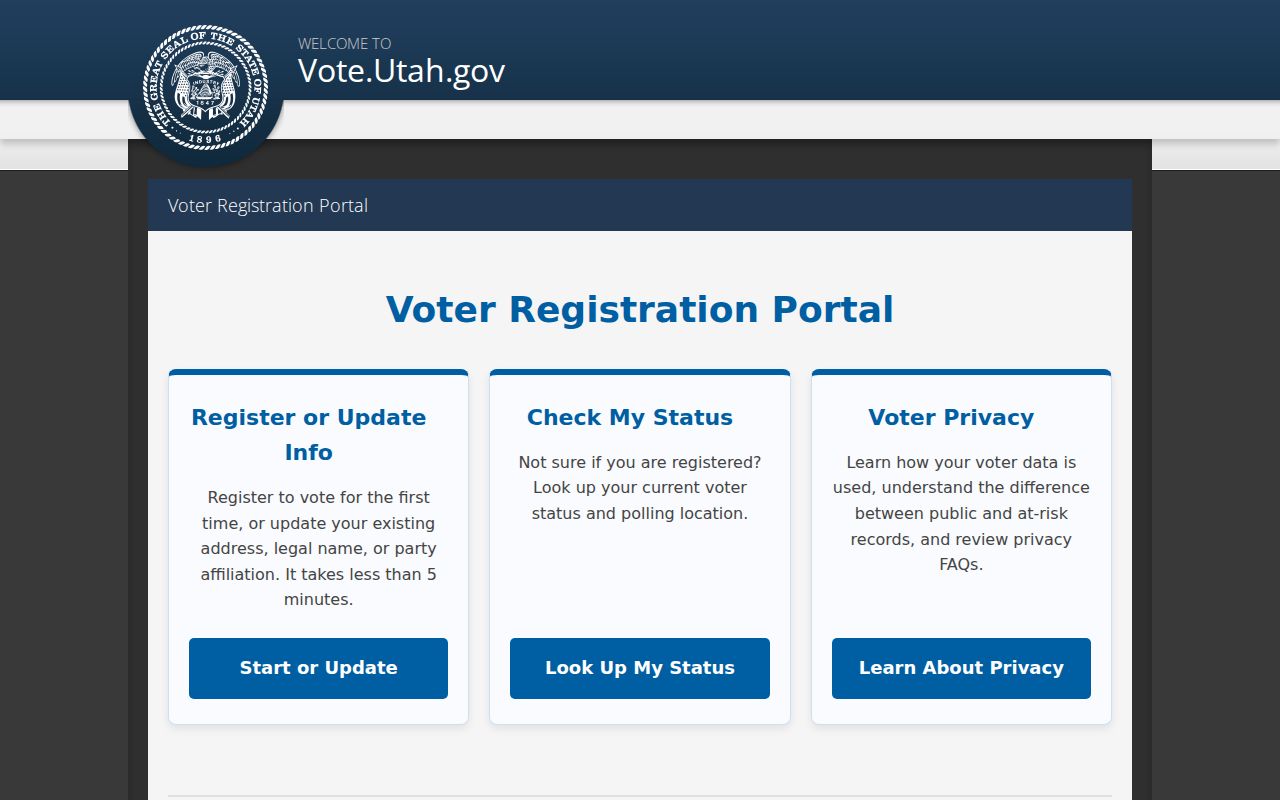
At-risk records may be withheld, so do not infer anything from a missing result.
What a Duchesne County Owner Lookup Cannot Tell You
A public owner-of-record entry has limits. It does not confirm who lives at the property. It does not confirm who holds keys. It does not reveal who may speak for a trust or estate. Utah shields sensitive voter information. Protected details include full date of birth, phone, email, signature, driver-license number, and Social Security number. At-risk voter records may be withheld or anonymized. Property records never grant permission to expose protected people. They never permit combining records for targeting them.
Lawful use. Use a Duchesne County owner lookup for property diligence, ownership verification, or a lawful civic purpose. Do not use names or mailing details to stalk, threaten, or harass anyone.